
 Image 1 of 1
What Is Attic Insulation?
Attic insulation is a protective thermal layer installed on the attic floor to slow heat transfer between the roof and living space. Common materials include fiberglass (blown-in or batts), cellulose, and spray foam, but blown-in fiberglass is one of the most popular for home efficiency due to its fire resistance, affordability, and ability to fill tight gaps and irregular areas effectively.
Why It’s Important for Homes
The attic is one of the largest sources of energy loss in a home. Without proper insulation, heat enters quickly in summer and escapes in winter, causing HVAC systems to run longer to compensate. In Texas, insulation is especially critical due to extreme summer temperatures, humidity, and high cooling demand. A properly insulated attic improves comfort, reduces energy waste, and supports a healthier indoor environment by reducing dust infiltration caused by air movement through gaps.
EPA & Energy Facts That Support Insulation
The U.S. Department of Energy estimates that homeowners can save 10–20% on heating and cooling costs by adding proper attic insulation
Fiberglass insulation is naturally fire-resistant and does not require added chemicals to slow flames
The EPA confirms that indoor air quality is impacted by pollutants like dust and allergens that can enter through poor attic sealing and insulation gaps
Proper insulation combined with air sealing reduces the movement of particles and pollutants between attic and living space
When Attic Insulation Needs to Be Removed or Upgraded
Common reasons include:
Compressed or flattened fiberglass that no longer insulates properly
Insulation disturbed by rodents or pests
Water damage, moisture exposure, or mildew
Excess dust, debris, or contamination in old material
Uneven distribution or low depth coverage.
A full inspection determines whether insulation can be topped up or needs full removal and replacement.
How Blown-In Fiberglass Is Installed
The process is precise and systematic:
Attic is inspected for depth, contamination, airflow issues, and sealing gaps
If necessary, old insulation is vacuum-removed using high-suction equipment
Attic entry and floors are protected during removal and disposal
Gaps around wiring, plumbing, top plates, and penetrations are air-sealed
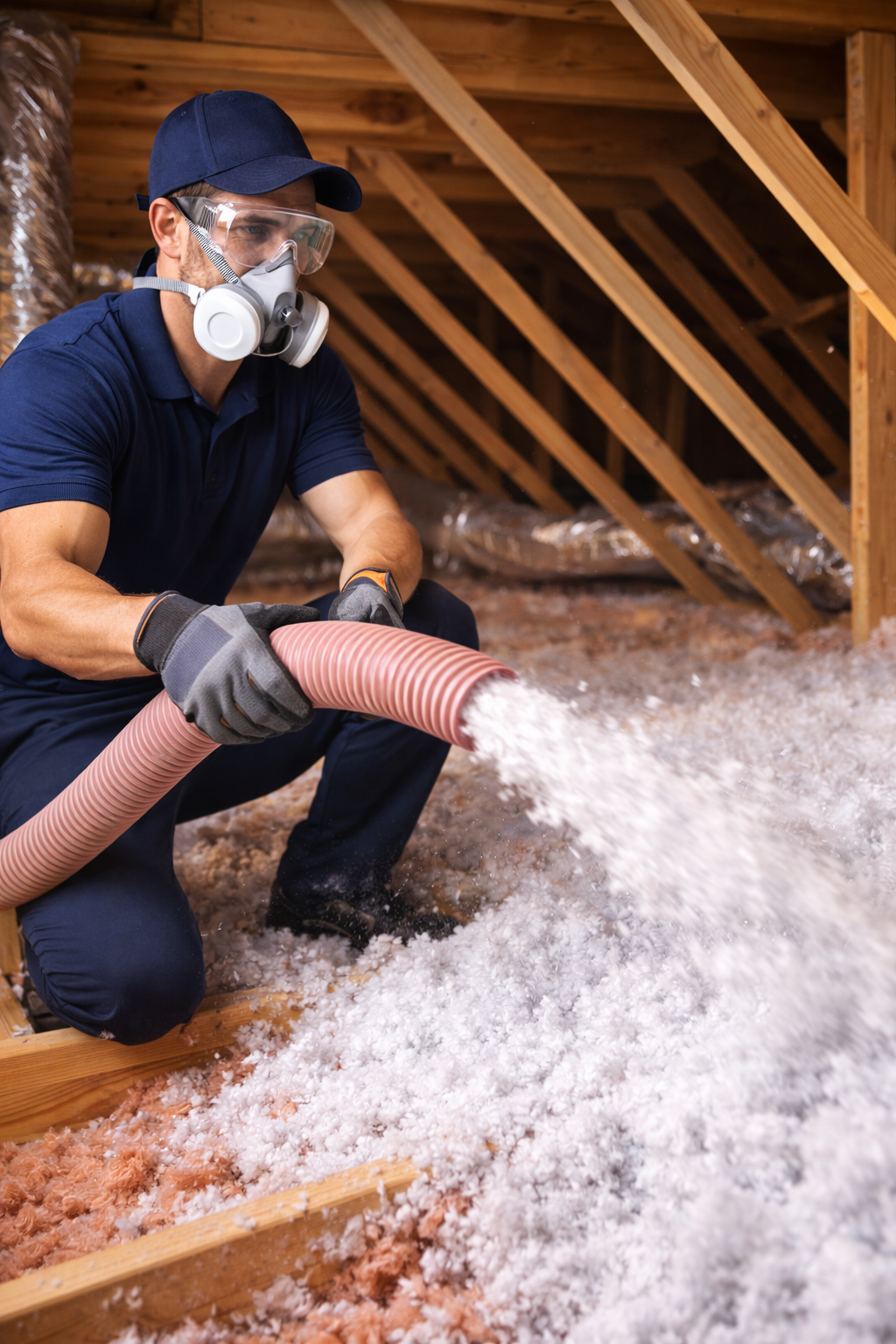
New loose/blown-in fiberglass is installed evenly across the attic floor using a hose system
Insulation is blown to target depth for full coverage (R-38+ is the most recommended level for hot climates like Texas)
Final depth and distribution are checked and documented
Blown-in fiberglass is effective because it fills gaps better than rolls or batts, reaches corners easily, and creates seamless coverage over large attic surfaces.
Benefits Homeowners Experience
Lower energy bills, especially in summer
Stronger and more balanced HVAC airflow throughout the home
Cooler rooms without temperature fluctuation
Reduced dust entering through attic floor gaps
Less strain on HVAC equipment, improving lifespan
Better resistance to fire hazards
Improved indoor air comfort and reduced allergens
Risks of Poor or Aging Attic Insulation
HVAC overheating from overuse
Higher energy consumption and rising utility costs
Inconsistent indoor temperatures between rooms
More dust, allergens, and attic particles circulating downward
Moisture retention in damaged or old insulation
Increased roof heat transfer leading to warmer ceilings
Shorter HVAC lifespan due to system overwork
Professional vs DIY Considerations
Homeowners can install small areas using rolls or batts, but professional insulation removal and blown-in installation ensures:
Proper depth accuracy
Safe debris containment
Full airflow consideration
Even, gap-free coverage
Long vent runs, bends, and attic corners are fully serviced DIY methods often fail to reach deep gaps, compressed areas, or long vent pathways safely.
Why Proper Attic Insulation Is Critical in Texas
Texas homes face long, high-heat summers, fluctuating humidity, heavy AC usage, and rising energy costs, making attic insulation one of the most important efficiency upgrades a homeowner can invest in. Since heat rises and the attic sits directly under the roof, temperatures in uninsulated attics can exceed 130–150°F, pushing that heat into ceilings and forcing HVAC systems to run longer to maintain indoor comfort. Proper insulation at recommended levels like R-38+ (common for Texas climates) slows heat transfer, reduces energy waste, stabilizes indoor temperatures, and helps prevent moisture issues that can develop when insulation ages or becomes uneven. A well-insulated attic also supports better airflow balance, reduces dust and allergens pulled downward through attic floor gaps, eases HVAC strain, and contributes to a safer, cooler, more energy-efficient home built to withstand Texas weather conditions year-round.